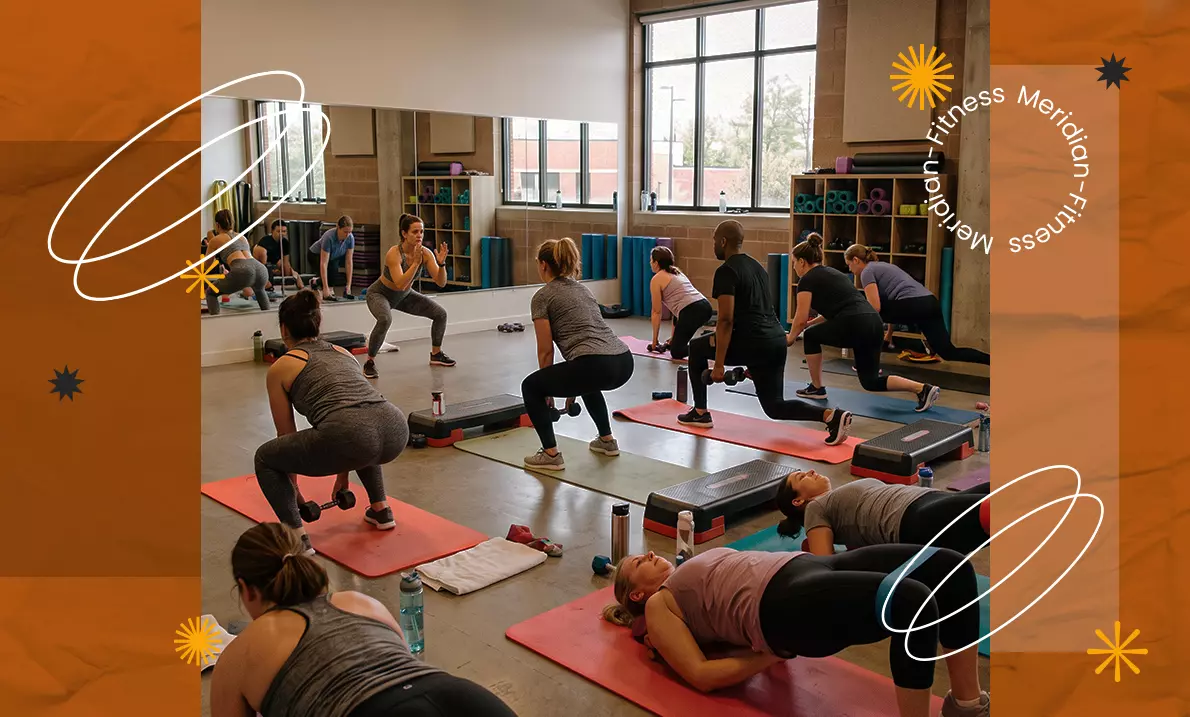
At Meridian Fitness in Greenwich, we regularly talk with clients who want to try kickboxing. Some are looking for a serious workout that gets them out of the treadmill rut. Others want to learn a real striking art. A few want to build confidence, feel less anxious walking home late, or just prove to themselves that they can do something intimidating.
The problem is that the phrase “kickboxing classes London” covers everything from a gym cardio class using boxing gloves to a hard-sparring Muay Thai session in East London. These are not the same activity. Booking blindly is how beginners either quit within a month because the class was too intense, or plateau because the class was not intense enough.
This guide is the framework the Meridian Fitness coaching team uses when clients ask us where to start with kickboxing. Whether you go on to train at a specialist gym in London or decide personal training and conditioning at our Greenwich studio is a better first step, you will walk away with a clear plan.
Based in Greenwich and thinking about kickboxing? Meridian Fitness offers personal training, strength coaching, and mobility programs that build the fitness foundation serious kickboxing training demands. Book a consultation to plan the right first step.
Why the Right Kickboxing Class Matters
Kickboxing is marketed as a universal fitness solution. It is not. A no-contact cardio kickboxing class at a chain gym and a hard-sparring Muay Thai session in Bethnal Green share a name and almost nothing else. One will make you sweat. The other might change how you carry yourself for the rest of your life.
At Meridian Fitness, we see two common mismatches. The first is people looking for a fun workout who accidentally book at a fight gym and get overwhelmed by the intensity and the sparring culture within their first two visits. The second is people wanting to learn real striking who end up in a punch-a-bag cardio format and are frustrated after eight weeks that they cannot actually kickbox.
Getting the match right at the start is the difference between a practice you commit to and a story you tell about a thing you tried once.
The Main Types of Kickboxing Classes You Will Find in London
Before you search “kickboxing classes London” and book the first result, understand what you are booking into. Here are the seven styles you are most likely to see on a London class schedule.
Cardio Kickboxing
Cardio kickboxing is a fitness format. Sessions are choreographed or bag focused, with no contact between students. Common at chain gyms and boutique fitness studios. Excellent for cardio, calorie burn, and stress release. You will not learn to actually kickbox, but that is not the goal of this format.
Muay Thai
Muay Thai is the Thai national sport and the technical foundation of much modern kickboxing. It uses punches, kicks, elbows, knees, and clinch fighting. Traditional Muay Thai gyms follow a serious training culture, use pad work heavily, and progress students to sparring over time. This is where you go for real striking skill.
Dutch Kickboxing
Dutch kickboxing evolved from the Netherlands’ fight scene and blends western boxing hands with heavy low kicks and aggressive combinations. It is more punch forward than Muay Thai and often more explosive. Popular in competitive kickboxing gyms.
K-1 Style Kickboxing
K-1 rules originated in Japan and allow punches, kicks, and knees with a limited clinch. It is a hybrid of styles under a common ruleset. Gyms teaching K-1 tend to be competition oriented but often welcome hobbyists at their beginner classes.
American Kickboxing
American kickboxing (sometimes called full-contact karate) allows punches and kicks above the waist only. Less common in London now than Muay Thai or K-1, but still taught in some traditional martial arts schools.
MMA Kickboxing
MMA kickboxing is a modified striking format for mixed martial arts. It integrates takedown defense, ground-fighting awareness, and shorter combinations. Available at MMA gyms rather than pure kickboxing gyms.
Group Fitness Formats (Boxercise, Body Combat, BoxHiit)
These are branded group fitness classes with kickboxing-inspired movements. They deliver a good workout but are not kickboxing training in any technical sense. Fine as an entry point if you want a low-commitment start.
Safety Checklist: 10 Things to Verify Before You Book
Kickboxing carries more injury risk than most fitness activities. Work through this list before you commit. This is the same screening standard the Meridian Fitness team applies when a client asks us to vouch for a kickboxing gym in London.
1. Instructor Credentials
Ask what qualifies your instructor to teach. For Muay Thai, look for a Kru or Ajarn title, active competition history, or lineage to a recognized gym in Thailand. For general kickboxing, look for BKBA, WAKO, UKMF, or IKF affiliation. A weekend certification is not enough for teaching contact striking.
2. Insurance
Every kickboxing gym operating in the UK should carry professional indemnity and public liability insurance. A serious gym will confirm this openly.
3. Class Size and Coach Ratio
Look for one coach per 10 to 15 students in beginner classes. Larger ratios in a contact sport mean less correction and more opportunity to develop bad habits or get injured during pad work and drills.
4. Health Screening
Good gyms ask you to complete a health form before your first class covering injuries, cardiac history, and any recent concussions. It is the same standard we use with new clients at Meridian Fitness. Skipping this is a red flag in a contact sport.
5. Beginner-Specific Class
A gym that respects beginners runs dedicated “foundations,” “fundamentals,” or “beginner” classes. Do not walk into a mixed-level class as a first-timer. You will not be safe, and you will not learn.
6. Sparring Policy
Ask directly, “When do beginners start sparring, and what protective gear is required?” Good gyms delay sparring for weeks or months while beginners learn the basics. Gyms that put you into contact sparring on day one are unsafe.
7. Progressive Contact Exposure
Even after you are cleared to spar, contact should be light and progressive. Beginner sparring is technical work at 20 to 30 percent power, not fighting. Any gym where beginner sparring rounds go hard is a walk-away.
8. Equipment and Facility Standards
Check bags, pads, and mats for wear. Sweat-soaked bags with torn seams and thinning mats mean the owner cuts corners on gear, and probably on other things too. Hand wraps and gloves should be required equipment.
9. Hygiene Protocol
Kickboxing gyms get sweaty and physical. Check whether mats are cleaned regularly, whether shared gloves and pads are wiped down, and whether the changing rooms are maintained. Skin infections are a real risk in mat-based training.
10. Trauma and First Aid Protocol
Ask what the gym does if someone takes a hard hit or twists a knee. A serious gym has a clear protocol, on-site first aid, and knows the nearest clinic. Ambiguity here means they have not thought about it.
Fit Checklist: Match Your Kickboxing Class to Fitness, Skill, or Confidence
The right class depends on the primary outcome you want. Very few people want all three equally, even if they think they do. Pick the top one honestly and choose accordingly.
If Your Primary Goal Is Fitness
You want a workout, not a technical martial art. Book cardio kickboxing, Boxercise, or a bag-focused fitness class at a chain gym or boutique studio.
What to expect:
- Sessions that push heart rate hard for 45 to 60 minutes
- Simple combinations repeated at high intensity
- Little to no partner work or contact
- Music-driven, energetic atmosphere
What to skip:
- Traditional Muay Thai gyms (too technical, wrong pace for pure fitness)
- Sparring-heavy schedules
- Fight-team focused gyms
At Meridian Fitness, we support this goal by combining kickboxing-style conditioning with structured strength training. If pure fitness is your outcome, a hybrid personal training program is often more efficient than a group class.
If Your Primary Goal Is Skill
You want to actually learn to kickbox. That means finding a gym with real coaching, real progression, and real sparring somewhere in your future.
What to expect:
- Instructors with 200-hour to 500-hour training or active competition background
- Structured curriculum covering stance, footwork, punches, kicks, defense, and clinch
- Pad work with corrections, not just choreographed sequences
- Progression to controlled sparring after several months
- Slower initial progress but real, transferable skill by month six
What to skip:
- Chain gym cardio classes
- Boxercise and similar branded formats
- Classes that never mention sparring or scenario work
Muay Thai gyms in East London (Bethnal Green, Whitechapel, Hackney) and North London (Camden, Islington) are traditionally strong for this. There are also serious gyms across South and West London.
If Your Primary Goal Is Confidence
You want to feel capable, walk taller, and know you could handle yourself if you had to. This is a legitimate and common goal, and the classes that deliver it are usually not the ones you would expect.
What to expect from the right class:
- A supportive beginner-first culture
- Progressive exposure to contact, starting light
- Clear instruction on how to defend as well as strike
- Ideally, mixed-sex classes with a strong beginner cohort
- Recognition of milestones (first sparring, first pad round with a coach, first belt or grading)
What to skip:
- Gyms with a heavy competition culture where you feel like the newest person forever
- Sparring-only classes without an instruction path
- Punch-a-bag-only formats that do not build real skill
At Meridian Fitness, we work with several clients whose primary goal was confidence rather than fitness or fight skill. What worked for most of them was a combination of strength training (which changed how they carried themselves), light martial arts exposure, and progressive challenge. Kickboxing can absolutely be the answer here, but the specific gym matters enormously.
How to Find Kickboxing Classes in London by Area
London is one of the strongest kickboxing cities in Europe, but different areas have different strengths. Here is a broad map of the “kickboxing classes London” landscape, with a note on where Meridian Fitness fits for South East London.
East London (Bethnal Green, Whitechapel, Hackney, Leyton)
East London is historically the heart of London’s fight scene. Traditional Muay Thai gyms, competitive kickboxing gyms, and MMA gyms cluster here. Great for skill-focused seekers. Expect a serious training culture.
North London (Camden, Islington, Kentish Town)
North London has a mix of traditional Muay Thai gyms and skill-focused kickboxing. Camden in particular has a long-standing kickboxing culture, with several gyms that welcome hobbyists at their beginner classes.
Central London (Zone 1)
Central London is heavy on cardio kickboxing at chain gyms and boutique studios. Fewer specialist fight gyms, though a handful of good ones exist. Best suited to the fitness-first crowd who work near their gym.
West London (Notting Hill, Fulham, Hammersmith)
West London tends toward boutique fitness kickboxing rather than traditional fight gyms, though a few serious Muay Thai options exist. Good for people who want polished facilities and a fitness-focused crowd.
South London (Brixton, Clapham, Peckham)
South London has a growing kickboxing scene with a mix of styles and price points. Solid options for both skill and fitness, with less of the competition pressure some East London gyms carry.
South East London (Greenwich, Blackheath, Charlton, Woolwich)
South East London has fewer specialist kickboxing gyms than the areas above, which is why many locals travel into central or East London for skill training. This is also where Meridian Fitness is based. We work with clients across SE10, SE3, SE7, SE8, SE14, and SE18, offering personal training and strength and conditioning that complements kickboxing training wherever you attend classes.
The pattern we see at Meridian Fitness is consistent. Skill-focused kickboxers benefit enormously from dedicated strength and conditioning work outside their striking training. That is often where we come in for our Greenwich clients.
Local to Greenwich and adding kickboxing to your routine? Meridian Fitness helps clients build the strength, mobility, and conditioning that lets them train harder and recover better between kickboxing sessions. Book a consultation to design your full training week.
Red Flags to Walk Away From
Some signals mean “book elsewhere,” regardless of price or reputation. The Meridian Fitness team recognizes these patterns from clients who came to us after a poor first kickboxing experience.
- The instructor cannot tell you their credentials or lineage. In a contact sport, credentials matter.
- Beginners spar on day one. Unsafe and pedagogically wrong.
- The gym has no beginner class and no first-session orientation. It is not built for you.
- You are told to “just push through” pain during class. Sharp pain in kickboxing usually means an injury.
- The gym pushes contact gear sales aggressively before your first class. Legitimate gyms let you try before you invest.
- Reviews mention injuries repeatedly or the same coach complaint. One bad review is noise. A pattern is a pattern.
- Pricing is opaque. Reputable London gyms publish rates. Anything requiring a “consultation” to see prices is set up to pressure sell.
Questions to Ask Any Kickboxing Gym Before Booking
Use these on the phone or over email. A gym that answers them clearly is one worth trying.
- “What are the instructor’s credentials and how long have they been teaching?”
- “How many people are usually in a beginner class?”
- “Do you offer a beginner-specific class or an introduction session?”
- “When do beginners start sparring, and what gear is required?”
- “What is your policy on light versus hard contact for new students?”
- “Do I need to buy gloves and wraps before my first class, or can I borrow?”
- “What health screening do you do before I train?”
- “What is the typical progression path for someone starting today?”
- “Do you offer a trial class or introductory pack?”
What to Expect at Your First Kickboxing Class
Arrive 15 minutes early. You will fill out a health form and, at a good gym, get a brief orientation from a coach. Wear athletic clothes you can move and sweat in. Bring hand wraps if you own them. Most beginner-friendly gyms will lend gloves for a first class.
Expect a warm-up (usually skipping, shadow boxing, and mobility), technique instruction (stance, basic punches, basic kicks), pad or bag work (drills with a partner or on equipment), and a cool-down. Total class time is typically 60 to 90 minutes.
You will feel awkward. Your kicks will look nothing like the coach’s. Your stance will drift. This is normal. Every kickboxer felt this way. It fades faster than you think.
Muscle soreness in your calves, hips, and core the next day is normal. Sharp joint pain or acute wrist or knee pain during class is not. If you are unsure whether what you are feeling is normal, the Meridian Fitness team is happy to help you interpret it.
What Kickboxing Classes Cost in London
Kickboxing pricing in London varies more than most fitness disciplines. Typical ranges:
- Drop-in class at a chain gym or fitness studio: £15 to £25
- Drop-in at a specialist Muay Thai or kickboxing gym: £15 to £30
- Class packages (10 sessions): usually 10 to 15 percent off the drop-in rate
- Monthly unlimited membership at a specialist gym: £80 to £180
- Private 1-on-1 coaching: £50 to £120 plus
- Initial gear (gloves, wraps, mouthguard, shin guards for Muay Thai): £80 to £250
These are broad ranges based on typical London pricing. Introductory offers such as a free first class or a discounted trial week are common and worth using to compare gyms side by side. Meridian Fitness runs transparent introductory consultations for personal training clients, with pricing shared openly on request.
Why Choose Meridian Fitness for Your London Fitness Journey
You may have opened this guide expecting a comparison of kickboxing gyms in London. What we hope you take away is that “the right kickboxing class” is really shorthand for “the right fitness foundation and the right training environment for the outcome you actually want.” That foundation is where Meridian Fitness comes in.
Here is what makes our Greenwich studio a strong option for anyone taking kickboxing seriously:
We build the strength and conditioning that supports kickboxing training. Real kickboxers, at every level, need lower-body power, rotational core strength, and durable joints. That is standard programming for us. If you train at a Muay Thai gym in East London three times a week, one or two sessions with us can transform your output.
We are genuinely local. Meridian Fitness is based in Greenwich, minutes from Cutty Sark DLR, and we work with clients from Blackheath, Charlton, Woolwich, Deptford, and across South East London. When we advise on commute realities and combining training modalities, we know them because we live them.
We start with a proper assessment. Every new client at Meridian Fitness begins with a movement, history, and goals consultation. If your goal is to build the base for kickboxing, we design the program around that.
Our coaching is one-to-one or small group by design. We deliberately cap sessions so our coaches can watch, correct, and progress you. This is exactly the individual attention most drop-in kickboxing classes cannot deliver.
We are honest about fit. If your kickboxing gym in London is the right primary training and you just need occasional S&C, we will say so. If a more comprehensive training program at Meridian Fitness would serve you better, we will explain why. Either way, you leave with a clear plan.
If you are searching kickboxing classes London because you want to train seriously, feel more capable, or just get in the best shape of your life, Meridian Fitness belongs on your shortlist. Not as a replacement for a specialist kickboxing gym, but as the coaching team that helps you get the most from every hour you spend striking pads.
Frequently Asked Questions
Which Kickboxing Class Is Best for Beginners in London?
A beginner-specific class at a gym that runs dedicated fundamentals sessions. Look for Muay Thai gyms with a “beginners only” evening or weekend slot, or reputable fitness studios with a proper progression path. Avoid mixed-level classes at specialist gyms as your first exposure.
Is Kickboxing a Good Workout for Weight Loss?
Yes. A serious kickboxing class burns a large number of calories per hour and builds full-body conditioning. Combined with sensible nutrition, it is one of the more effective fitness formats for body composition change. Cardio kickboxing at chain gyms is less demanding than specialist gym training but still effective.
Do I Need to Be Fit Before Starting Kickboxing?
No. Beginners are welcome at every reputable kickboxing gym in London. That said, if you have not exercised in some time, a few weeks of general conditioning first will make your early classes far more enjoyable. We at Meridian Fitness regularly build these preparation blocks for clients before they start at a striking gym.
How Often Should I Train Kickboxing as a Beginner?
Twice a week is the sweet spot for the first two months. Once a week is not enough to progress. Three times a week is fine once your body has adapted after eight to ten weeks, but pay attention to recovery.
Muay Thai or Kickboxing: Which Should I Choose?
Muay Thai is a specific traditional discipline that uses eight points of contact (fists, elbows, knees, shins). Kickboxing is broader and often uses fewer weapons (usually just fists and shins or feet). If you want the deepest technical tradition and clinch work, Muay Thai. If you want a more punch-heavy Western boxing style with kicks added, kickboxing.
How Long Before I See Results From Kickboxing?
Cardio and body composition changes show at 4 to 8 weeks of twice-weekly training. Real technical skill shows at 3 to 6 months of consistent coaching. Confidence often shifts faster than either, sometimes within the first two months.
Can Kickboxing Help With Self-Defense?
Yes, with important caveats. Real striking skill, developed over months and years, is genuinely useful. But kickboxing gyms are training environments, not self-defense courses. If self-defense is your primary goal, look for a gym that includes scenario training or complement your kickboxing with a dedicated self-defense course.
Do I Need to Spar to Get Value From Kickboxing?
No. Many people train kickboxing for years without ever sparring competitively. Pad work, bag work, and technical drilling deliver most of the fitness and skill benefit. Sparring adds another dimension for those who want it, but it is not required.
Which Are the Best Kickboxing Classes London for Confidence Building?
Look for beginner-first gyms with a supportive culture, a strong mixed-sex beginner cohort, and clear progression. Confidence building comes from feeling competent, and that requires structure. If you would like a second opinion on your shortlist, or to explore complementary strength and mobility training, book a consultation with Meridian Fitness in Greenwich.
Ready to Find the Right Kickboxing Class in London?
We know Greenwich because we train here. If you are searching kickboxing classes London and trying to figure out where to start, or how to level up an existing practice, the Meridian Fitness team is happy to help you think it through.
Book a no-obligation consultation at our Greenwich studio and we will:
- Listen to your goals, history, and any injuries or concerns.
- Give you an honest recommendation, whether that is a specialist kickboxing gym in London, a personal training program with us, or a blend of both.
- Design the strength and conditioning that supports whatever striking training you commit to.
We are based in Greenwich, minutes from Cutty Sark DLR, and we work with clients from Blackheath to Woolwich and beyond. Our job is to make sure your first move, or your next move, into kickboxing training is the right one.
Contact Meridian Fitness in Greenwich today to book your kickboxing classes.