If you have searched “LBT Classes Greenwich” and found a timetable you like, the next question is how many of those sessions to book. For most people, one to three LBT sessions a week fits well within a balanced programme. The right number for you depends on how hard the class is, how experienced you are, what other exercise you do, and how well you recover between sessions.
That is not a dodge. Legs, bums and tums is a lower-body and core class, and the lower body is the part of you that also walks to the station, climbs stairs and sits in a spin class. How much LBT you can absorb depends on everything else your legs are already doing. This guide works through one, two and three sessions a week, the recovery between them, how to combine LBT with other classes, and how to tell whether you have found the right number.
Is one LBT class a week enough?
It depends on what you want from it. One class a week is enough to stay active, add variety to a programme built around other training, and build the habit of turning up. It is not usually enough on its own to drive steady strength or shape changes in the legs and glutes.
One session supports three things well:
- General activity. A 45-minute class that works the entire lower body and core is a solid contribution to a week’s exercise routine.
- Variety. For someone who mainly runs, cycles, or lifts upper body, a weekly LBT session covers the muscles those activities skip.
- Building a routine. One fixed class a week is far easier to keep than three ambitious ones, and consistency matters more than volume for anyone new to training.
Where one class falls short is progression. Muscles adapt to a stimulus that is repeated and gradually increased. A single weekly session gives the legs one exposure, and seven days later the adaptation has largely faded. If the goal is noticeably stronger legs or a firmer glute shape, the week needs either a second LBT class or some additional lower-body resistance work alongside it.
What happens if you do LBT twice a week?
Twice a week is the frequency that works for most regular class members. It gives enough repetition to make progress, enough space between sessions to recover, and enough room in the week for other classes.
- More practice. Technique in squats, lunges, and glute bridges improves faster with two exposures a week than with one. Movements that felt awkward in week one become automatic by week four.
- Consistency. Two classes, say Monday and Friday, create a rhythm. Miss one and the week still contains an LBT session, which is the difference between a stumble and a lost week.
- Enough space for recovery. Three or four days between sessions is comfortable for most people, even when the classes are demanding.
- Easier integration. Two LBT sessions leave Tuesday, Wednesday, and the weekend for yoga, Pilates, spin, upper-body work, or rest.
For most people reading this, twice a week is the answer. The following sections are to determine whether you are an exception in either direction.
Can you do LBT three times a week?
Yes, conditionally. Three sessions a week can work when the classes are moderate rather than maximal, when you have been training for a while, and when LBT is your main lower-body work rather than an addition to it.
Five things decide whether three is sensible:
- Training intensity. A class where every set goes to the point of shaking legs is different from one with controlled effort and plenty of rest. Three maximal sessions a week will catch up with most people; three moderate ones may not.
- Experience. Someone six months into regular training recovers faster from a hard leg session than someone in their second week.
- Other leg training. If you also run, cycle, do spin, or squat in the gym, your legs are already working several times a week. Three LBT classes on top is a lot of lower-body volume.
- Soreness. Walking into Wednesday’s class still sore from Monday’s is a sign the third session is one too many, at least for now.
- Recovery quality. Sleep, food, and stress decide how much training the body can use. On a good week, three sessions land well; in a bad week, two is wiser.
A reasonable approach is to run two sessions a week for a couple of months, then add a third and see whether the quality of each class holds up. If it does, keep it. If the third session feels flat, drop back.
Should you do LBT every day?
Usually not necessary, and for most people not useful. Daily LBT means the same muscles are worked hard seven days in a row, with no window to adapt.
Muscles get stronger between sessions, not during them. A demanding lower-body class causes minor muscle damage and fatigue, and the body repairs and reinforces the tissue over the next day or two. Train the same muscles hard again before that process finishes, and the repair never fully completes; performance drops, technique gets sloppy, and the sessions start to feel like a chore. Repeated hard lower-body sessions without adequate recovery reduce training quality rather than increase results.
If you want to train every day, alternate. LBT one day, an upper-body or core session the next, yoga or walking the day after. The legs get their stimulus two or three times a week, and the rest of the body fills in the gaps.
How much recovery do you need between LBT classes?
For most people, at least one full day between LBT sessions, and more often two or three. There is no fixed number, because recovery is individual, but six things govern it.
- Training intensity. The harder the session, the longer the recovery. A moderate class may be fine to repeat in 48 hours; a very demanding one may need 72.
- Muscle soreness. Mild stiffness the next day is normal and no reason to skip training. Soreness that makes stairs difficult on day two is a reason to wait.
- Sleep. Short or poor sleep slows recovery more than most people expect. A bad night before a class is a reason to go easier, not to skip, but a bad week is a reason to drop a session.
- Nutrition. Enough food, and enough protein within it, is what the body uses to repair muscle. Under-eating lengthens recovery.
- Existing training volume. Recovery from LBT has to compete with recovery from everything else. The more other training in the week, the more space each LBT session needs.
- Individual recovery. Two people doing the same class recover at different rates. Age, training history, and general health all play a part, and the only reliable guide is how you feel going into the next session.
Avoid arbitrary rules. “Always 48 hours” is a reasonable starting point, not a law; adjust by how the legs feel and how the next class goes.
How should beginners schedule LBT classes?
Start with two sessions a week, spaced well apart, with lighter activity between them. Here is one way a first month could look:
| Day | Training |
| Monday | LBT |
| Tuesday | Rest or light activity |
| Wednesday | Yoga or upper-body training |
| Thursday | Rest |
| Friday | LBT |
| Weekend | Walking, recovery, or another preferred activity |
This is an example, not a prescription. The two LBT sessions are four days apart. The Wednesday session works different muscles, and the weekend is free for whatever keeps you moving without loading the legs heavily again. A beginner who finds Friday’s class hard after Monday’s can start with one session a week and add the second after a few weeks. If the first class itself is the worry, our guide to LBT classes for beginners in Greenwich covers what to expect and how the exercises are scaled.
How should you combine LBT with other fitness classes?
LBT pairs well with most gym timetables, provided the lower-body load across the week is considered as a whole.
LBT and Pilates
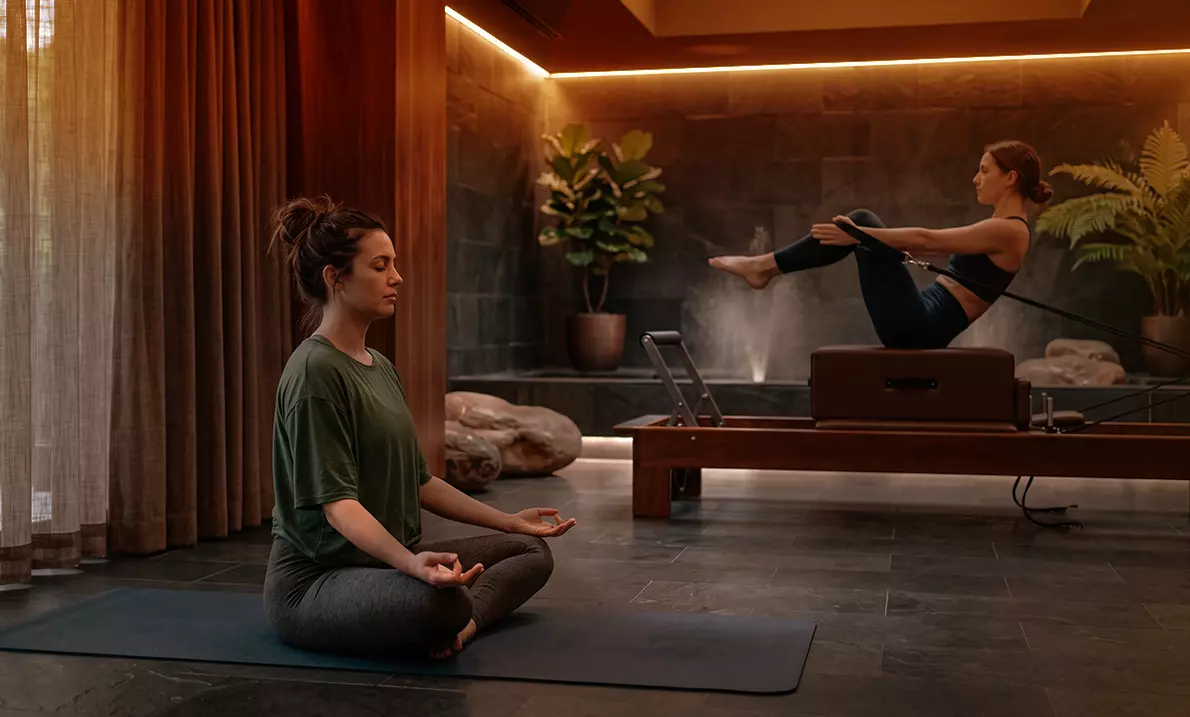
A natural combination. Pilates builds the deep core control and hip stability that make squats and lunges cleaner, and it is low-load, so it can sit the day after LBT without competing for recovery. Many members treat Pilates as active recovery between LBT sessions.
LBT and yoga
Yoga restores the hip and hamstring mobility that repeated squatting and lunging can tighten, and a slower class the day after LBT helps with stiffness. Avoid pairing a strong, held-pose yoga class with LBT on the same day if the legs are already tired; the quality of both suffers.
LBT and spin
Both load the legs, so count them together. Two LBT sessions and two spin classes is four leg-heavy sessions a week, which suits an experienced member and overloads a beginner. Space them so that spin does not land the day after a hard LBT class, or keep one of the spin sessions deliberately easy.
LBT and strength training
If you squat or deadlift in the gym, LBT is additional lower-body volume, not a substitute. Put the LBT class and the heavy leg day at opposite ends of the week, or use LBT as the lighter of the two. People who want LBT to be their main leg training can skip the separate gym leg day entirely.
LBT and HIIT
HIIT often involves jumping and lunging, so it overlaps with LBT more than its name suggests. One LBT and one HIIT session a week is a sensible pairing; two of each is a lot of impact on the legs, and recovery needs to be planned around it.
For a broader view of how different classes serve different aims, our guide to fitness classes for different training goals maps each format to the result it best supports.
How do you know if you are doing too much?
The signals are practical and show up in the sessions themselves before anything else.
- Performance dropping. Weights, reps, or holds that were manageable two weeks ago are now a struggle.
- Persistent fatigue. Tired on waking, tired through the day, not just tired after training.
- Excessive soreness. Stiffness that lasts three or four days, or that never fully clears between sessions.
- Lack of motivation. Dreading a class you used to look forward to is information, not a character flaw.
- Technique deteriorating. Knees caving in squats, lower back taking over in bridges, lunges getting shorter and shakier.
Any two of these together are a reason to drop a session for a week or two and see whether they resolve. If they persist after reducing training, or if anything feels like pain rather than fatigue, speak to an instructor or an appropriate professional rather than training through it.
How long before you notice progress from LBT?
Different kinds of progress arrive on different timelines, and the fastest ones are the least visible.
Exercise confidence comes first, usually within two or three classes. Movements stop needing thought, and the class feels less like a test.
Strength progress follows over the first four to eight weeks. Deeper squats, steadier lunges, longer holds, and heavier bands or dumbbells, where the class uses them.
Fitness and endurance improve across the same period. The cardio intervals stop being the hardest part, and the final round of the class no longer feels impossible.
Body-composition changes take the longest and depend on more than the class. Diet, total weekly activity, sleep, and starting point all play a part, and the changes show up in how clothes fit and how the legs feel before they show up in a mirror. Timelines vary widely, and anyone promising a visible result in a set number of weeks is guessing.
Consistency over months, not intensity over weeks, is what moves all four.
How can you build an LBT routine around the Greenwich timetable?
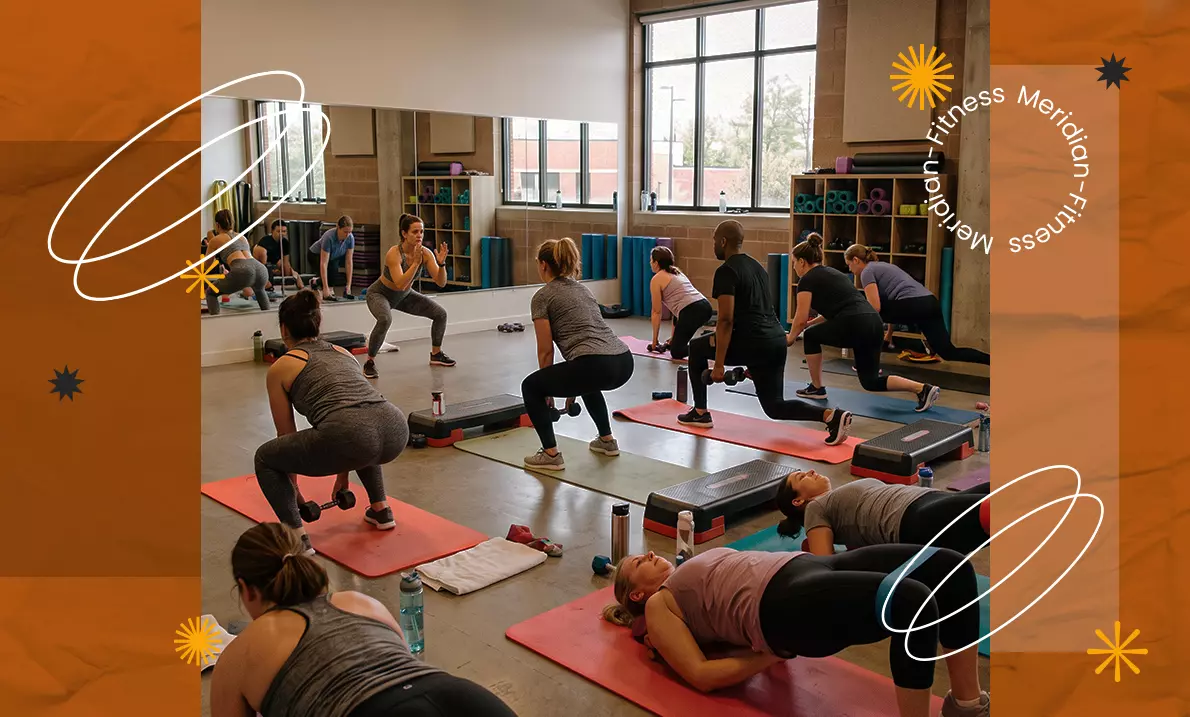
Meridian’s LBT sessions run for 45 minutes at the Creek Road club in SE8 and combine strength exercises such as squats, lunges and leg raises with cardio intervals and core work, with a warm-up and cool-down stretch built into each class. They are designed for all levels, so a beginner and a regular can book the same slot.
The 45-minute length makes two sessions a week straightforward to fit around work: one early in the week and one towards the end, each short enough to fit a lunch break or an after-work slot before dinner. For anyone building the schedule above, the practical step is to look at the Greenwich fitness class timetable and pick two LBT slots three or four days apart, then fill the days in between with Pilates, yoga, or a rest day. The class details and booking are on the page where you can find LBT classes in Greenwich.
Frequently asked questions about LBT frequency
Can you do LBT two days in a row?
You can, but it is rarely the best choice. Back-to-back sessions give the legs and glutes no time to recover, so the second class is usually lower quality. Leave at least one day between LBT sessions, and use the day between for upper-body work, Pilates, yoga, or rest.
Is LBT twice a week enough?
For most people, yes. Twice a week gives enough repetition to improve technique and build strength, enough recovery between sessions, and enough room in the week for other classes. Add a third session only if the two are feeling easy and recovery is good.
Can you combine LBT and weight training?
Yes. Treat LBT as lower-body volume and plan the week so that a heavy gym leg day and an LBT class are not on consecutive days. If LBT is your main leg training, you may not need a separate gym leg session at all.
Do you need rest days after LBT?
Usually one or two days before the next lower-body session. That does not mean complete rest; walking, upper-body training, Pilates, or a gentle yoga class on the day after LBT are all fine and often help with stiffness.
How long should an LBT session be?
Meridian’s LBT classes are 45 minutes, which is long enough to warm up, work the legs, glutes and core properly, include cardio intervals and cool down. Longer is not better; a focused 45 minutes beats a padded hour.
Should beginners start with one class a week?
Either one or two. One class a week is the safest way to learn the movements and judge recovery; two spaced well apart is fine for most beginners who are already fairly active. Start with the number you can keep, then build from there.
The right number of LBT classes depends on your goal
If you want to stay active and add variety, one class a week does the job. If you want visible progress in strength, technique, and shape, two sessions a week with recovery between them is the number that works for most people. Three suits experienced members with good recovery and little other leg training. Every day suits almost nobody.
Choose the frequency you can sustain for months, pay attention to how the legs feel going into each class, and adjust from there. If you are still searching “LBT Classes Near Me” and want a timetable built for all levels, Meridian’s 45-minute sessions in Greenwich are a practical place to start.