Mat Pilates can already challenge your core, control and coordination. But once familiar exercises start feeling predictable, adding a stability ball changes the exercise almost immediately.
The reason is simple: the ball moves.
When part of your body rests on an unstable surface, you have to control the intended Pilates movement while also preventing the ball from rolling away. Your trunk, hips and surrounding stabilising muscles continually make small adjustments to keep you balanced.
That is the idea behind Pilates on the Ball, sometimes called stability ball Pilates or Swiss ball Pilates.
Research comparing Swiss ball and stable-surface exercises has found that adding instability can increase the activity of certain core muscles during particular movements, although the effect depends heavily on the exercise being performed. It is therefore more accurate to say the ball changes and often increases the stabilisation demand, rather than claiming every exercise becomes twice as difficult.
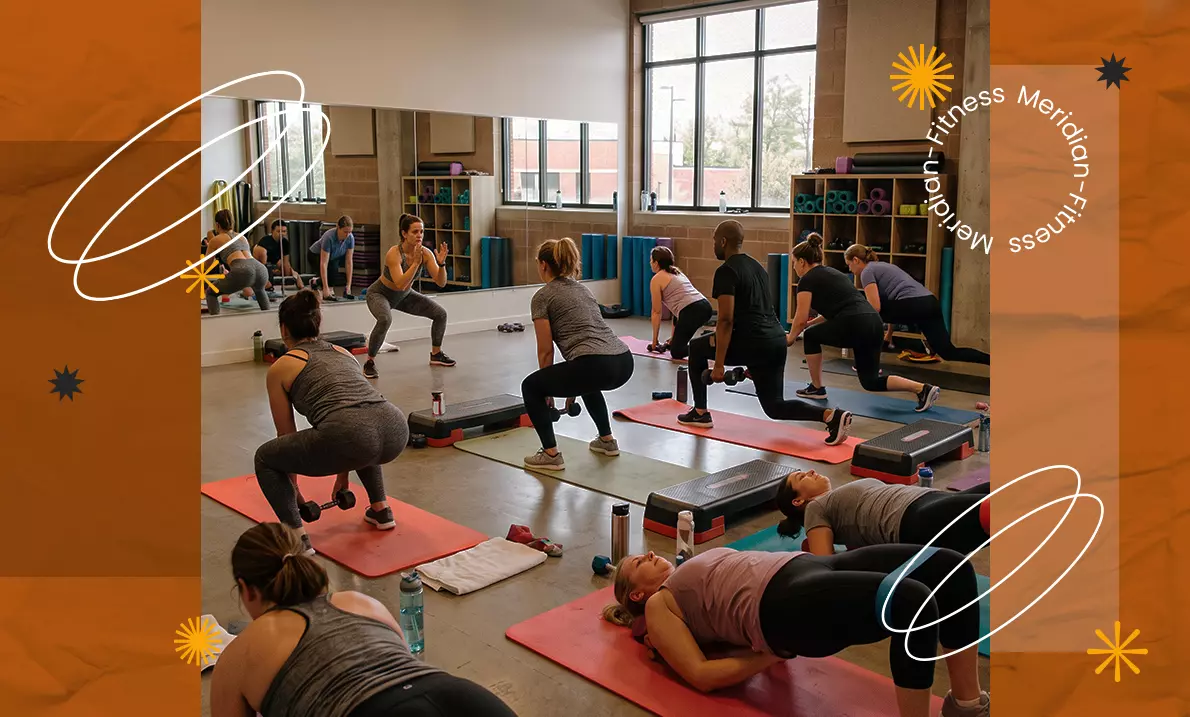
For people in Greenwich who want to explore the method with an instructor, Meridian Fitness currently includes Pilates on the Ball within its weekly Pilates timetable, alongside Mat Pilates, Yogilates Fusion and Aerial Yogalates.
Here is how stability ball Pilates works, which exercises to try and how to decide whether it suits your current fitness level.
What is Pilates on the Ball?
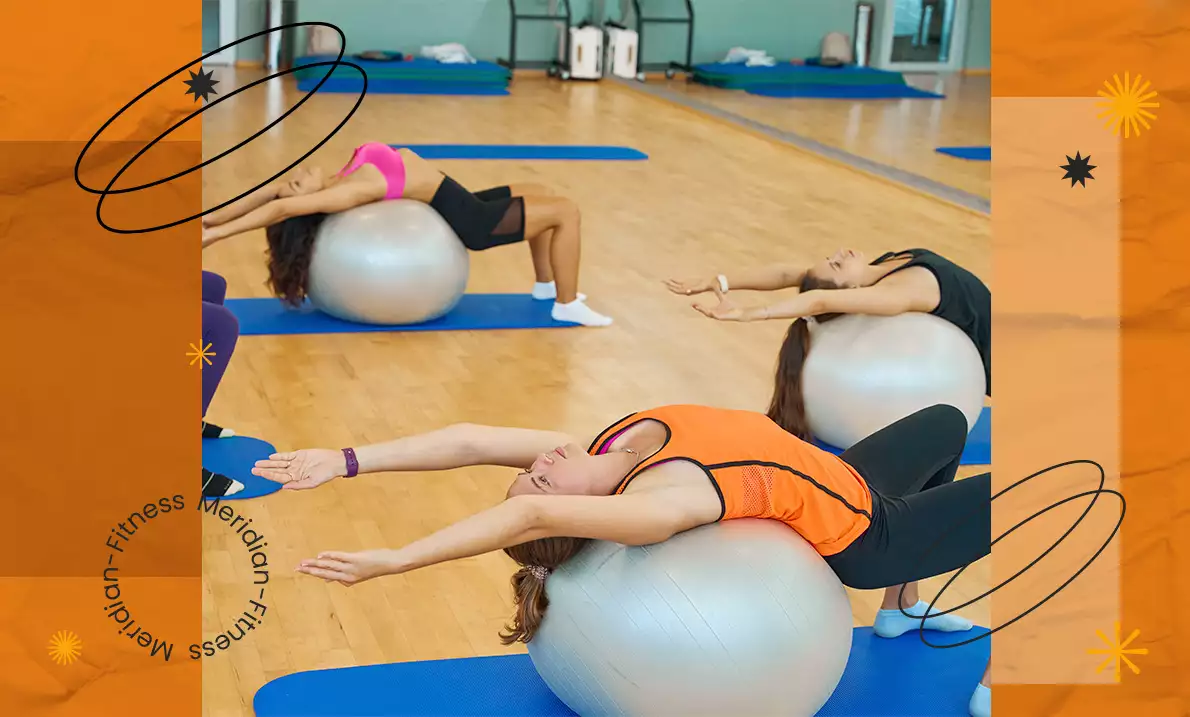
Pilates on the Ball combines Pilates principles with a large inflatable stability ball.
You may also hear the equipment described as a:
- Swiss ball
- Stability ball
- Exercise ball
- Fitness ball
- Physio ball
The name varies, but the basic training idea is similar.
Traditional Pilates already asks you to control your trunk while coordinating your breathing, limbs and spinal position.
A stability ball changes your base of support.
Instead of having your back, hips, hands or feet firmly supported by the floor, part of your body may rest on a surface that can roll forwards, backwards or sideways.
That forces you to respond to small movements throughout the exercise.
The result can be a workout that challenges:
- Core control
- Balance
- Coordination
- Body awareness
- Hip stability
- Movement precision
- Muscular endurance
The ball can also be used to modify some movements rather than simply make everything harder.
That is important.
Pilates on the Ball is not just “harder Pilates”.
The ball can create instability in one exercise, provide support in another and change the available range of movement in a third.
The science behind Pilates on the Ball
The value of a stability ball comes largely from instability.
Imagine performing an exercise with both feet planted on a solid floor.
The ground stays exactly where it is.
Now imagine placing your lower legs on a large inflatable ball.
If your hips shift slightly to the right, the ball may begin rolling right. If your trunk rotates, the ball can move with it.
Your body has to recognise that movement and respond to it.
That is where stabilisation becomes important.
Why an unstable surface changes the exercise
When your base of support is unstable, your nervous system and muscles have to work together to keep your body under control.
Your abdominal muscles are not working in isolation.
Muscles around the:
- Abdomen
- Lower back
- Pelvis
- Hips
- Shoulders
may all contribute depending on the exercise.
One laboratory study compared eight Swiss ball exercises with traditional abdominal exercises. It found particularly high activation of several abdominal muscles during Swiss ball roll-outs and pikes, although activation varied significantly between exercises.
Another comparison of core exercises performed on and off a Swiss ball found increased rectus abdominis activation during some ball-based movements, but not all.
That distinction matters.
The ball itself is not magic.
Exercise selection matters more than simply putting an exercise on an unstable surface.
What is proprioception?
Proprioception is your body’s ability to sense where its joints and limbs are positioned without having to look at them constantly.
Try closing your eyes and bending your elbow.
You still know roughly where your hand is.
That awareness comes from sensory information your nervous system receives from muscles, joints and other tissues.
Balance-based exercises challenge your ability to use that information quickly.
During a Swiss ball exercise, your body continually receives information about:
- Where the ball is moving
- Where your weight is distributed
- Whether your pelvis is level
- Whether your trunk is rotating
- Whether you are losing balance
You then make tiny corrections.
This is one reason stability ball training can feel surprisingly demanding even when you are not lifting heavy weights.
Does Pilates on the Ball really activate your core more than other forms of Pilates?
Sometimes, but not during every exercise.
That is the more useful answer.
Studies have found increased abdominal muscle activity during certain Swiss ball movements. For example, research has shown strong abdominal activation during exercises such as the ball roll-out and pike.
A small pilot trial comparing Swiss ball and mat exercises also reported improvements in core stability with both approaches, with greater improvement in the Swiss ball group studied.
But instability does not automatically increase the activity of every muscle.
Research examining Pilates back-extension exercises, for example, found greater erector spinae activity on the stable surface than when the same exercises were performed on a Swiss ball.
So think of the ball as a way to change the challenge, not as a guarantee that every movement becomes superior to Mat Pilates.
Key exercises for Pilates on the Ball
A stability ball can be incorporated into dozens of exercises.
The following movements demonstrate four different ways the ball can change a workout: supporting a squat, creating instability during trunk work, increasing coordination during core exercises and challenging the posterior chain.
Quality matters more than speed.
Start slowly and stop if you cannot maintain control.
The ball squat: leg strength plus balance
A ball squat is one of the more accessible ways to begin working with a stability ball.
One common version places the ball between your back and a wall.
How to perform it
- Place the stability ball between your lower to mid back and a wall.
- Step your feet slightly forward.
- Keep your chest comfortably upright.
- Bend your knees and allow the ball to roll down the wall as you lower.
- Descend only as far as you can control comfortably.
- Press through your feet to return to standing.
- Repeat slowly.
What does it work?
The movement primarily challenges the:
- Quadriceps
- Glutes
- Hips
- Trunk stabilisers
The ball provides support while still requiring you to control your body position.
For somebody building confidence with squats, this version may feel different from a completely unsupported bodyweight squat.
Common mistake
Do not assume that going as low as possible makes the exercise better.
Your knees, hips and trunk should remain controlled throughout the movement.
Back extension on the ball: control through the trunk
Back-extension movements can be performed with the torso supported by the stability ball.
The exercise can help you practise controlled trunk extension while managing an unstable base.
Basic setup
- Position your torso over the ball.
- Keep your feet securely supported.
- Begin with your body gently curved around the ball.
- Engage your trunk.
- Lift your chest through a comfortable range of motion.
- Avoid throwing your head or shoulders backwards.
- Lower with control.
The movement should feel smooth rather than explosive.
Is the Swiss ball version automatically better?
No.
Research specifically examining Pilates back-extension exercises found that erector spinae muscle activity was actually higher on the stable surface than on the Swiss ball in the participants studied.
That makes this exercise a good reminder that the point of stability ball Pilates is not to maximise muscle activation in every movement.
It is to introduce different movement demands.
Dead bug with the ball: deep core control
The dead bug is already a useful trunk-control exercise.
Adding a ball creates an extra coordination challenge.
One way to perform it
- Lie on your back.
- Bring your hips and knees into a bent position.
- Hold the stability ball between your hands and knees.
- Gently press your hands and knees into the ball.
- Maintain your trunk position.
- Slowly extend one arm and the opposite leg away from the ball.
- Return to the starting position.
- Change sides.
The movement should remain slow.
If your lower back position changes dramatically when your arm or leg moves, shorten the range of motion.
Why is it challenging?
You are managing several tasks at once:
- Maintaining pressure against the ball
- Controlling the pelvis
- Moving opposite limbs
- Breathing
- Preventing unwanted trunk rotation
This is a good example of how a simple prop can make an otherwise familiar movement require more concentration.
Hamstring curls on the ball: posterior-chain control
Stability ball hamstring curls combine a bridge with controlled movement of the ball.
They can be particularly demanding through the backs of the legs and hips.
How to perform them
- Lie on your back.
- Rest your heels on top of the ball.
- Keep your arms supported on the floor.
- Engage your trunk.
- Lift your hips into a controlled bridge.
- Bend your knees and draw the ball towards you.
- Slowly extend your legs again.
- Lower your hips when the repetition is complete.
A Mayo Clinic stability-ball routine similarly uses bridge-based movements with the heels supported on a ball to challenge the trunk and lower body.
What does it work?
The exercise challenges the:
- Hamstrings
- Glutes
- Hips
- Abdominal stabilisers
It also requires you to prevent the ball from drifting sideways.
If you are new to the movement, practising a static bridge with your heels on the ball can be easier before adding the curl.
Other Swiss ball exercises to progress towards
Once you are confident with the basics, stability ball training can include movements such as:
- Seated balance
- Ball bridges
- Ball roll-outs
- Hip lifts
- Pike variations
- Knee tucks
- Modified press-ups
- Leg lifts
- Pelvic movements
- Single-leg stability exercises
Some of these are considerably more advanced than they look.
A ball pike, for example, can generate high abdominal muscle activity but demands good shoulder stability, trunk control and confidence with the equipment.
Progress gradually.
Who should try Pilates on the Ball?
Pilates on the Ball can be adapted for different abilities, but it is particularly useful for several types of exercisers.
Intermediate exercisers looking for a new challenge
If you can already perform Mat Pilates exercises with good control, the ball can introduce a new variable without requiring you to abandon the movements you know.
A familiar bridge feels different when your feet are on a rolling ball.
A familiar trunk exercise changes when your support surface can move.
This provides progression through instability and coordination, rather than simply adding more repetitions.
People wanting to challenge balance and body awareness
The stability ball gives you immediate feedback.
If your weight shifts dramatically, the ball moves.
If one side is doing considerably more work, you may notice yourself rotating or drifting.
This can make exercises useful for practising:
- Balance
- Symmetry
- Movement awareness
- Trunk control
Mayo Clinic also identifies fitness-ball exercises as a way to work on core strength, flexibility and balance.
People who want to make home workouts more varied
A stability ball is relatively simple equipment compared with a large resistance machine.
It can be used for:
- Core training
- Lower-body exercises
- Mobility work
- Supported movements
- Balance exercises
However, learning movements in an instructor-led setting first can be useful before trying harder versions alone at home.
Can beginners do Pilates on the Ball?
Yes, but the exercise selection needs to suit the beginner.
You do not need to perform pikes, roll-outs or advanced balance movements during your first class.
A beginner might start with:
- Seated ball control
- Wall-supported ball squats
- Basic pelvic movements
- Supported bridges
- Simple core exercises
- Small-range movements
The ball can sometimes provide both support and instability.
Meridian Fitness currently describes its wider Pilates programme as suitable for beginners as well as regular Pilates participants, with instructor guidance and movement options.
If your balance is limited, tell the instructor before class.
Pilates on the Ball vs Mat Pilates
Neither style is universally better.
The biggest difference is what your body has to control.
| Factor | Pilates on the Ball | Mat Pilates |
| Training style | Adds an unstable or supportive ball | Primarily floor-based |
| Stability demand | Often higher during selected movements | More predictable base of support |
| Core challenge | Can increase stabilisation demands | Strong emphasis on controlled core work |
| Balance demand | Usually greater | Usually lower |
| Coordination | Often more complex | Easier environment for learning movement patterns |
| Beginner friendly | Yes, with appropriate modifications | Often easier as a starting point |
| Main benefits | Core control, balance, coordination and proprioception | Core control, alignment, breathing and movement precision |
| Equipment | Stability/Swiss ball plus mat where needed | Primarily a mat |
| Best suited to | People wanting additional instability and variety | Beginners and anyone wanting controlled floor-based Pilates |
| Meridian class option | Currently available | Currently available |
Which should you start with?
Choose Mat Pilates if you are still learning:
- Basic Pilates positions
- Breathing
- Pelvic control
- Movement precision
- Core engagement
Consider Pilates on the Ball when you want to add:
- Instability
- Balance
- Coordination
- Variety
- A new progression challenge
You do not have to choose one permanently.
Using both can expose you to different movement challenges.
What size stability ball do you need?
Ball size matters because an incorrectly sized ball can make your setup awkward.
A useful starting guide from Mayo Clinic is:
| Your height | Suggested stability ball |
| 5’1″–5’7″ / 155–170 cm | 55 cm |
| 5’8″–6’1″ / 173–185 cm | 65 cm |
| 6’2″ / 188 cm and taller | 75 cm |
When seated on the ball with your feet flat on the floor, your knees should generally be around a right angle.
Mayo Clinic also notes that ball inflation changes difficulty: a firmer ball generally creates a more challenging surface, while slightly reducing inflation can make the ball easier to control when starting out.
For an instructor-led class, follow the instructor’s setup guidance rather than selecting equipment purely from a chart.
Safety tips for stability ball Pilates
The fact that a ball moves is what makes the training useful.
It is also what makes careless setup a bad idea.
Give yourself enough space
Do not perform a new ball exercise next to:
- Sharp furniture
- Free weights
- Glass
- Steps
- Other obstacles
Give the ball room to move without creating another hazard.
Learn the basic movement first
If you cannot yet control the exercise on a stable surface, adding instability may not be the best first progression.
Master the pattern before making it more complicated.
Slow down
Fast movement can hide poor control.
Pilates benefits from deliberate movement.
The aim is not to see how quickly you can bounce through repetitions.
Use the correct ball size
A ball that is much too large or small can change your position.
Check your setup before starting.
Stop if you feel pain
Muscular effort and pain are not the same thing.
Stop and speak to an instructor if a movement produces:
- Sharp pain
- Dizziness
- Numbness
- Unusual joint pain
- Loss of control
Get individual advice when necessary
If you are exercising because of an injury, a persistent back problem, a balance disorder, pregnancy, recent surgery, or another medical concern, generic Swiss ball exercises from the internet may not be the right starting point.
Speak with an appropriate healthcare professional or qualified exercise professional about modifications.
How to incorporate stability ball workouts in Greenwich
You do not have to build a home programme from random online exercises to try the modality.
Meridian Fitness currently runs dedicated Pilates on the Ball classes in Greenwich as part of its weekly Pilates programme.
Its live timetable currently lists:
| Class | Day | Current time | Duration | Focus |
| Pilates on the Ball | Tuesday | 7:00–8:00 pm | 60 min | Core control, balance and stability-ball work |
| Pilates on the Ball | Saturday | 11:00–11:45 am | 45 min | Core control, balance and stability-ball work |
| Pilates (Mat) | Thursday | 7:15–8:00 pm | 45 min | Mat-based Pilates |
| Yogilates Fusion | Tuesday | 11:00–11:45 am | 45 min | Yoga and Pilates-inspired movement |
| Aerial Yogalates | Saturday | 12:00–1:00 pm | 60 min | Aerial yoga/Pilates fusion |
Timetables can change, so check the live Meridian Fitness timetable before travelling.
How much do Pilates classes cost at Meridian Fitness?
Meridian Fitness currently states that its Greenwich Pilates classes run for 45 or 60 minutes and start from £15. Its Pilates programme includes Mat Pilates, Pilates on the Ball, Yogilates Fusion and Aerial Yogalates.
| Option | Current published information |
| Pilates class duration | 45 or 60 minutes |
| Class price | From £15 |
| Pilates on the Ball | Tuesday and Saturday |
| Mat Pilates | Thursday |
| Location | Meridian Fitness, Greenwich |
The exact amount you pay may depend on how you access the club or classes, so check the current booking page before attending.
Meridian also offers day-pass and membership options that include access to classes.
Can personal training help you learn stability ball exercises?
Yes, especially if you want to use a ball outside a class but are uncertain about:
- Ball size
- Exercise selection
- Technique
- Balance
- Progressions
- Modifications
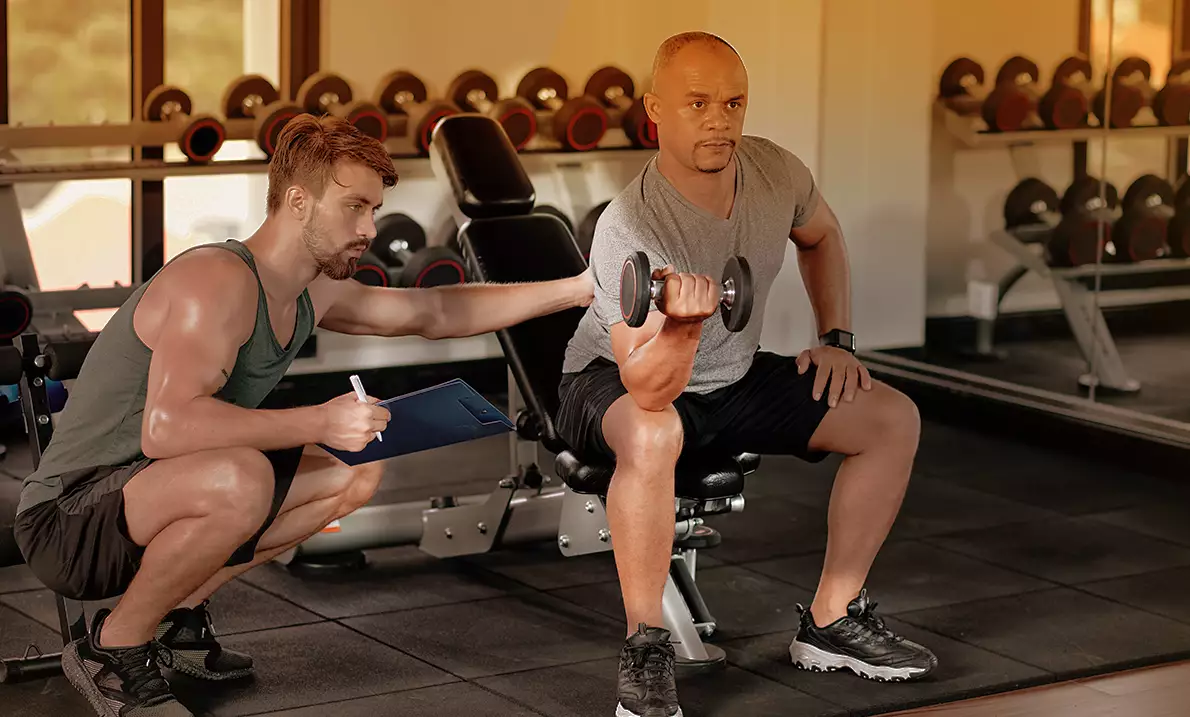
A personal trainer can watch how you perform an exercise and decide whether adding instability actually improves the training objective.
That matters because a more difficult exercise is not automatically a more useful one.
Meridian Fitness offers personal training in Greenwich from qualified trainers, with individual coaching tailored to your fitness level and goals.
Is Pilates on the Ball good for weight loss?
Pilates on the Ball can contribute to your overall physical activity, but it is not a special fat-loss method.
Body-weight change depends on your overall energy balance over time, including:
- Food intake
- Daily movement
- Structured exercise
- Lifestyle
- Consistency
A stability ball can make selected movements more challenging and help you build a varied exercise routine, but using a Swiss ball does not automatically burn body fat from your stomach or any other specific area.
Choose Pilates on the Ball primarily for its movement, stability and training benefits rather than treating it as a quick weight-loss solution.
Why does the stability ball make familiar Pilates movements feel harder?
Your body has fewer fixed points of support.
On a mat, the floor does not move.
On a ball, you may simultaneously have to:
- Perform the intended movement.
- Keep the ball controlled.
- Maintain trunk position.
- Prevent unwanted rotation.
- Balance your weight.
- Continue breathing normally.
Even a simple exercise can therefore feel more demanding without adding external weight.
This is the real appeal of stability ball Pilates.
It changes the movement problem your body has to solve.
FAQs about Pilates on the Ball
Is Pilates on the Ball good for weight loss?
Pilates on the Ball contributes to physical activity and can make some exercises more demanding, but it is not a standalone weight-loss solution. Sustainable weight management depends on overall energy balance, activity, nutrition and consistency. Choose the class mainly for core control, balance, coordination and exercise variety.
What size stability ball do I need for Pilates?
Mayo Clinic suggests a 55 cm ball for people around 155–170 cm tall, 65 cm for those around 173–185 cm, and 75 cm for those around 188 cm or taller. When seated, your feet should be flat, and your knees should be roughly at a right angle.
Can beginners do Pilates on the Ball?
Yes. Beginners can start with simple supported exercises rather than advanced pikes or roll-outs. The important factors are correct ball size, instructor guidance and choosing movements that match your balance and strength. Meridian Fitness describes its wider Pilates programme as suitable for beginners and regular participants.
How does a stability ball target the core differently?
The ball creates a movable base of support. Your trunk muscles may need to make additional adjustments to control your body and prevent unwanted movement. Research has found increased abdominal activation during some Swiss ball exercises, but the effect varies by exercise.
Is a Swiss ball the same as a stability ball?
Generally, yes. Swiss ball, stability ball, fitness ball, exercise ball and physio ball are commonly used names for the large inflatable balls used in strength, balance, rehabilitation and fitness exercises.
Is Pilates on the Ball harder than Mat Pilates?
It can be because the unstable surface adds a balance and coordination challenge. However, difficulty depends on the exercise. The ball can also support some movements. Mat Pilates may be easier when first learning movement patterns, while ball work can provide a useful progression.
Does Pilates on the Ball improve balance?
Stability-ball exercises challenge balance because the support surface can move. Mayo Clinic includes balance among the areas fitness-ball training can work on. The actual improvement you achieve depends on exercise selection, progression and regular practice.
Does Meridian Fitness offer Pilates on the Ball?
Yes. Meridian Fitness’s current Greenwich timetable lists Pilates on the Ball on Tuesday from 7:00–8:00 pm and Saturday from 11:00–11:45 am. Its Pilates programme also includes Mat Pilates, Yogilates Fusion and Aerial Yogalates. Check the live timetable for changes before attending.
Try Pilates on the Ball in Greenwich
If normal Mat Pilates movements are starting to feel familiar, adding a stability ball can offer a new challenge without abandoning Pilates principles.
The goal is not to wobble as much as possible.
It is to remain controlled despite the instability.
That requires concentration, balance, coordination and continual trunk control.
At Meridian Fitness in Greenwich, you can currently try Pilates on the Ball in instructor-led sessions on Tuesday evenings and Saturday mornings, alongside Mat Pilates and other Pilates-based classes.
Whether you are progressing from Mat Pilates or trying stability-ball training for the first time, start with exercises you can control and let difficulty increase gradually.
The ball should make your movement more purposeful, not simply more complicated.