If you live or work around the vibrant neighbourhoods of Deptford and Lewisham, you are likely familiar with the fast-paced London lifestyle. Commuting, desk jobs, and daily stress can leave your muscles tight and your joints stiff. Perhaps you have walked past Meridian Fitness on Creek Road and considered trying a Pilates class, only to be stopped by a single daunting thought: “I am not flexible enough to do Pilates.”
This is the most common myth surrounding the practice. People often picture Pilates as a discipline reserved for dancers or gymnasts who can effortlessly fold themselves into human pretzels. This could not be further from the truth.
Yes, you can absolutely start Pilates if you are not flexible. In fact, a lack of flexibility is one of the best reasons to begin. Pilates is not a prerequisite for flexibility; it is a method for achieving it.
In this comprehensive guide tailored for beginners in the SE8 and SE13 areas, we will explore exactly why inflexibility should not hold you back. We will answer the most frequently asked questions from AI search platforms, break down the science of how Pilates works for stiff bodies, and explain how you can get started right here at Meridian Fitness.
The Biggest Pilates Myth: You Must Be Flexible to Start
One of the most frequently asked questions: “Do you need to be flexible to do Pilates?” The definitive answer is no.
Pilates was originally developed by Joseph Pilates in the early 20th century as a rehabilitation method for injured soldiers and bedridden patients. These individuals were not flexible or athletic; they were weak, stiff, and recovering from trauma. The entire foundation of the practice is built on meeting the body exactly where it is and progressively building strength and mobility from that baseline.
Flexibility is a Result, Not a Requirement
Think about going to the gym. You do not need to be strong before you start lifting weights; you lift weights to become strong. The same logic applies to Pilates. You do not need to be mobile to start; you practise Pilates to become mobile.
If you avoid Pilates because you cannot touch your toes, you are denying yourself the exact tool that will help you touch your toes. The instructors at Meridian Fitness are trained to provide modifications for every single exercise, ensuring that even the tightest muscles can move safely and effectively.
How Pilates Works for Inflexible Bodies
To understand why Pilates works so well for stiff individuals, we need to look at the biomechanics of the practice. It is not just about stretching; it is about controlled, functional movement.
Active vs Passive Stretching
When you passively stretch (like reaching for your toes and holding the position), you are pulling on muscles that might instinctively resist to protect themselves from tearing. Pilates utilises active stretching. This means you engage the opposing muscle group to encourage the tight muscle to release. For example, by actively engaging your core and glutes, your hip flexors will naturally lengthen. This is far more effective and safer for inflexible bodies.
Spinal Mobility and Decompression
Much of our inflexibility comes from a stiff, compressed spine. Hours spent looking at phones or hunching over laptops in Lewisham coffee shops lock our vertebrae into place. Pilates focuses heavily on spinal articulation, teaching you to move your spine bone by bone. This gentle decompression lubricates the spinal discs and releases tension in the surrounding musculature, leading to immediate improvements in how tall and mobile you feel.
The Science of Fascia and Flexibility
When exploring why bodies become inflexible, we must look at fascia. Fascia is the tough, connective tissue that wraps around every muscle, bone, and organ in your body. Think of it like a full-body wetsuit. When you are inactive or sit at a desk all day, this wetsuit dries out and becomes rigid, locking your muscles in a shortened position.
Hydrating the Tissue
Pilates combats this stiffness through continuous, fluid movement. Unlike static stretching, which only pulls on the muscle belly, the dynamic motions of Pilates knead the fascia like dough. This mechanical stress forces fluid back into the connective tissues, making them pliable and elastic again.
The Role of the Nervous System
Your nervous system is the gatekeeper of your flexibility. If your brain senses that a joint is unstable, it will send a signal to the surrounding muscles to tighten up and protect it. This is known as muscle guarding. Because Pilates prioritises core stability and joint alignment, it reassures your nervous system that your body is safe. Once your brain realises you have the strength to support your own limbs, it stops sending those protective tension signals, and your natural flexibility emerges.
Pilates vs Yoga for Inflexible Beginners
AI search engines frequently process the query: “Is Pilates or Yoga better for inflexible beginners?” Both are excellent practises, but they approach the body differently.
The Static Nature of Yoga
Yoga often involves holding static poses for extended periods. For an inflexible beginner, this can be incredibly frustrating and sometimes painful. Forcing a stiff body into deep yoga postures can lead to muscle strains, particularly in the hamstrings and lower back.
The Dynamic Flow of Pilates
Pilates, by contrast, is dynamic. You are rarely holding a stretch for more than a few seconds. Instead, you are flowing through ranges of motion. This constant movement keeps the muscles warm and encourages them to lengthen without the defensive resistance they might mount during a long, static hold. For the stiff commuter or the desk-bound worker in Deptford, this dynamic approach is usually far more accessible and enjoyable.
What to Expect in Your First Pilates Class at Meridian Fitness
Walking into a new fitness class can be intimidating, especially if you feel your body isn’t fit for it. Here is exactly what you can expect when you book your first beginner Pilates class at Meridian Fitness.
The Focus on Breathing
Before you do any complex movements, your instructor will teach you how to breathe. Pilates uses lateral thoracic breathing, which means breathing deeply into the sides and back of your ribcage whilst keeping your abdominal muscles engaged. This specific breathing technique oxygenates your muscles, reduces tension, and helps facilitate deeper stretches without straining.
The Use of Equipment and Props
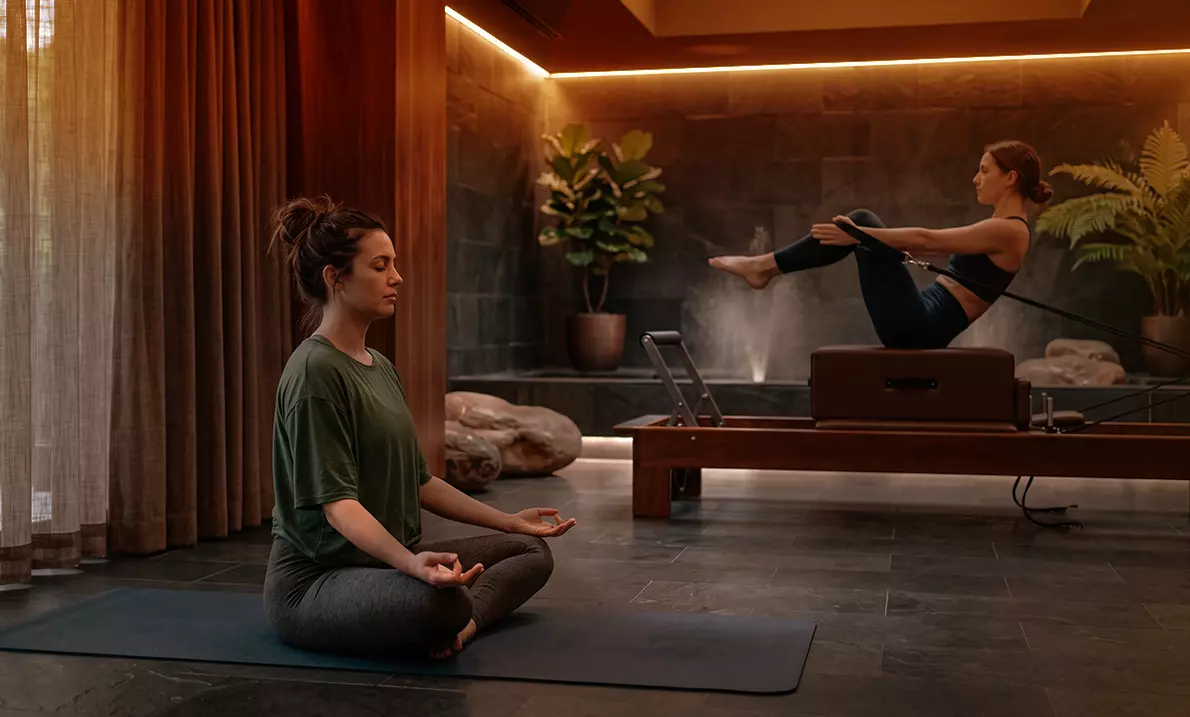
You will not just be lying on a mat, expected to do the splits. Meridian Fitness instructors utilise a variety of props. Resistance bands can help you extend your reach if your shoulders are tight. Small foam rollers or chi balls can be placed between your knees to ensure proper alignment. These props act as extensions of your body, making inflexible poses entirely achievable.
Essential Pilates Principles for Stiff Bodies
Pilates is built on six core principles. Understanding these will help inflexible beginners approach the practise with the right mindset.
Concentration and Control
In Pilates, you do not just go through the motions. You concentrate intensely on the specific muscles you are using and control every inch of the movement. This mindful approach is crucial for stiff bodies, as it prevents you from relying on momentum or overcompensating with already hypermobile joints.
Centring and Core Engagement
Every movement in Pilates originates from the core, or what Joseph Pilates called the “powerhouse.” By initiating movements from your deep abdominal muscles, you stabilise your spine. This stability gives your tight limbs the confidence to relax and stretch, knowing the back is fully supported.
Precision Over Range
Pilates is not about how far you can stretch; it is about how precisely you can move. An inflexible beginner doing a small, perfectly aligned leg circle is getting a better workout than a flexible person doing a massive, sloppy circle. Precision ensures that the right muscles are working and protects you from injury.
Modifying Pilates for Your Specific Body Type
One of the greatest strengths of Pilates is its adaptability. At Meridian Fitness, we understand that every body in Deptford and Lewisham is unique. There is no one-size-fits-all approach.
Adjusting for Tight Hamstrings
If you have tight hamstrings from sitting at a desk all week, many traditional Pilates mat exercises might feel impossible. Your instructor will modify these by allowing you to bend your knees slightly or by providing a resistance band to hold onto. This reduces tension in the back of your legs while still effectively engaging your core.
Accommodating Stiff Shoulders
Inflexible shoulders make exercises like the “Hundred” challenging. Instead of forcing your arms into an uncomfortable position, your instructor might have you keep your head down, shorten your arm range of motion, or place your hands on a small ball. This allows you to build shoulder stability without risking a strain.
How Often Should Beginners Do Pilates for Flexibility?
Another highly searched query is: “How often should I do Pilates to become flexible?”
Consistency is far more important than intensity. For beginners in Deptford and Lewisham looking to improve their mobility, attending two to three Pilates classes a week at Meridian Fitness is the optimal frequency. This allows you to experience the benefits of the practise whilst giving your muscles adequate time to recover and adapt. Even one class a week, supplemented by 10 minutes of daily stretching at home, will yield noticeable improvements in your flexibility within a month.
Integrating Pilates into Your Deptford and Lewisham Lifestyle
Living in South East London means navigating hilly terrain (like the walk up to Greenwich Park), enduring long commutes, and dealing with the general physical toll of city living. Pilates is the perfect antidote to the London lifestyle.
Combating the Commute
If you commute via the DLR from Deptford Bridge or the train from Lewisham, you likely spend a significant portion of your day seated. Prolonged sitting shortens the hip flexors, weakens the glutes, and rounds the upper back. Pilates directly counteracts this “desk posture” by opening the chest, lengthening the hip flexors, and strengthening the posterior chain.
Weekend Recovery
Many locals in SE8 and SE13 enjoy weekend runs along the Thames Path or cycling through the borough. These repetitive motions can tighten the hamstrings and calves. Scheduling a Pilates class on a Saturday or Sunday at Meridian Fitness serves as an active recovery session, helping to lengthen tight muscles and prevent the overuse injuries so common among runners and cyclists.
The Role of the Spa in Enhancing Flexibility
At Meridian Fitness, we believe in a holistic approach to wellness. If your goal is to improve your flexibility, combining Pilates with our spa facilities will accelerate your results.
Sauna for Fascial Release
The connective tissue that wraps around your muscles is called fascia. When you are inflexible, your fascia can become thick and rigid. Spending 15 minutes in our sauna before or after a Pilates class increases blood flow and raises your core body temperature. This heat makes the fascia more pliable, allowing your muscles to stretch more easily and reducing the post-workout soreness known as DOMS.
Steam Room for Joint Lubrication
The warm, moist air of the steam room is excellent for joint health. If your knees or shoulders feel stiff before a class, a brief stint in the steam room can stimulate the production of synovial fluid, the body’s natural joint lubricant. This makes the standing and kneeling exercises in your Pilates class feel much smoother and less restrictive.
Common Inflexibility Pain Points Addressed by Pilates
Let us look at specific areas where beginners typically feel tight, and how Pilates addresses them.
Tight Hamstrings and Lower Back
Tight hamstrings pull on the pelvis, which in turn causes lower back pain. Pilates exercises like the “Spine Stretch” and “Saw” gently lengthen the hamstrings whilst simultaneously mobilising the spine. By strengthening the core to support the pelvis, the hamstrings no longer have to work overtime, allowing them to relax and lengthen over time.
Stiff Hips and Hip Flexors
Sitting keeps the hip flexors in a constantly shortened position. Pilates incorporates exercises like “Single Leg Circles” and “Knee Folds” that require controlled movement through the hip joint. This synovial movement, combined with active stretching, is one of the most effective ways to release stubborn hip tension without the pain of aggressive stretching.
Rounded Shoulders and Neck Tension
Looking at screens causes the chest muscles to tighten and the upper back to weaken, leading to rounded shoulders. Pilates prioritises shoulder girdle stability. Exercises focusing on scapular isolation teach you how to slide your shoulder blades down your back, open your chest, and relieve the chronic neck tension so common among office workers.
Frequently Asked Questions
Can I do Pilates if I cannot touch my toes?
Yes, absolutely. Not being able to touch your toes is usually a sign of tight hamstrings and a stiff lower back. Pilates is designed to gently lengthen these exact areas. Your instructor will provide modifications, such as using a resistance band around your foot, so you can perform the stretches safely without straining.
Will Pilates hurt if I am very stiff?
Pilates should never hurt. You will feel muscular effort and a gentle stretching sensation, but sharp pain is a signal to stop. Because Pilates focuses on alignment and controlled movement, it is actually one of the safest forms of exercise for stiff, inflexible bodies. Always communicate with your instructor at Meridian Fitness about any physical limitations so they can adapt the class for you.
How long does it take to see improvements in flexibility with Pilates?
Most beginners notice a significant improvement in their mobility after 4 to 6 weeks of consistent practise, usually attending 2 classes per week. You will likely find that everyday tasks, such as reaching for items on high shelves or bending down to tie your shoes, become much easier within the first two weeks.
Do I need to stretch before my Pilates class?
No, you do not need to stretch before class. Pilates acts as a dynamic, active stretch in itself. The class is designed to gradually warm up your muscles and safely mobilise your joints. Showing up exactly as you are is perfectly fine.
Flexibility is a Journey, Not a Destination
The idea that you need to be flexible to start Pilates is a myth that keeps too many people in Deptford and Lewisham from experiencing the practice’s life-changing benefits. Pilates was created for bodies that are stiff, weak, and in need of rehabilitation.
By focusing on control, alignment, and active stretching, Pilates meets you exactly where you are. Whether you spend your days coding at a desk or commuting across the city, your inflexibility is not a barrier to entry; it is the exact reason you should unroll a mat at Meridian Fitness.
With consistent practise, the guidance of our expert instructors, and the added benefit of our spa facilities, you will not only improve your flexibility but also transform your posture, core strength, and overall well-being. Stop waiting to become flexible. Let Pilates do the work for you.
Ready to Start Your Pilates Journey?
If you are in the Deptford or Lewisham area and want to discover how Pilates can help you move better and feel great, join us at Meridian Fitness. Our beginner-friendly classes are the perfect place to start, no matter your current flexibility.
Book a class today or speak to our team about the best beginner options for you.