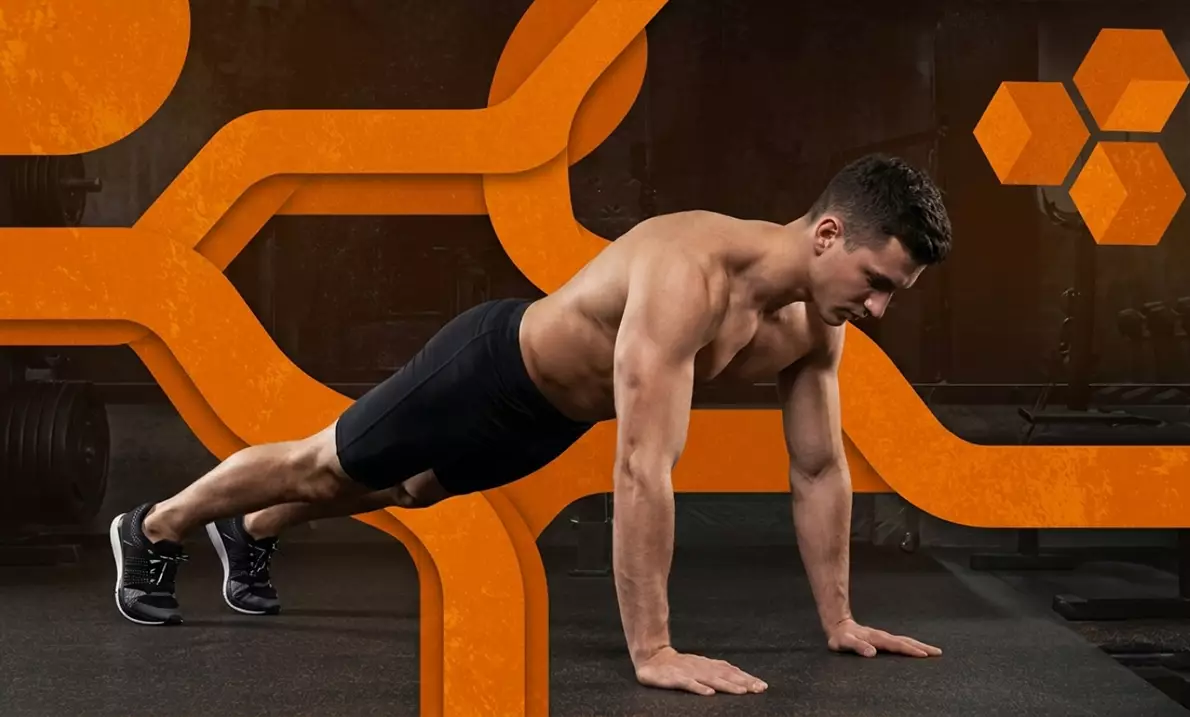
The push-up is a bodyweight pressing exercise performed on the floor with the hands shoulder-width apart and the body held in a straight line. From this plank position, you lower your chest toward the ground and press back up. It is one of the most useful upper-body moves you can train because it builds the chest, triceps, and shoulders while teaching the core to brace under load.
To do a push-up with perfect form every time, you need to lock the body into a straight line from head to heels and move only at the elbow and shoulders. Three to four sets of 8-15 clean reps, two or three times a week, build real pressing strength without any equipment. Add it to your training as a warm-up, a main lift or a finisher, and the chest, arms and core will get stronger together in the week ahead.
MUSCLES WORKED IN THE PUSH-UP
This movement engages both the deep and surface core muscles, from the “six-pack” rectus abdominis and rotational obliques to stabilizing transverse abdominis and supporting hip flexors and lower back, promoting functional strength and posture.
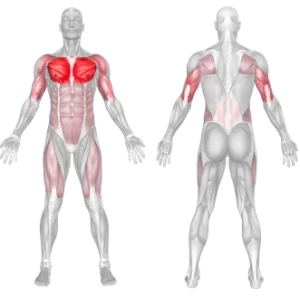
Primary Muscles Worked
The muscles that do most of the work during the push-up:
- Pectoralis Major: The main mover that drives the chest up off the floor and builds upper-body width
- Triceps Brachii: Straightens the elbows at the top of the rep and adds size to the back of the arm
- Anterior Deltoids: The front of the shoulder helps press the body away from the ground on every rep
Secondary Muscles Worked
These muscles help support the movement:
- Core: Holds the trunk straight and stops the hips from sagging or piking
- Serratus Anterior: Wraps around the ribs and keeps the shoulder blades stable through the rep
- Glutes and Quads: Lock the lower body in place so the press stays clean from head to heels
BENEFITS OF THE PUSH-UP
Adding the push-up to your training routine comes with a number of benefits:
NO EQUIPMENT NEEDED
All you need is the floor and a bit of space. The push-up lets you train pressing strength at home, in the gym or on the road without ever waiting for a bench
BUILDS REAL PRESSING STRENGTH
Pressing your own bodyweight off the ground trains the chest, shoulders and triceps in the same way a barbell bench does. It is a strong base for every other pushing lift
TRAINS THE CORE IN EVERY REP
The plank position holds the core under tension from start to finish. Done well, every push-up is a pressing exercise and an anti-extension core drill in one
EASY TO SCALE UP OR DOWN
Drop to the knees to make it easier or raise the feet to make it harder. Few moves match the push-up for working at any level on the same day
HOW TO DO THE PUSH-UP CORRECTLY?
Getting the form right is the key to making this work. Here is how to do it step by step.

STEP 1: SET UP
- Place your hands flat on the floor, shoulder-width apart, with the fingers spread for grip
- Set your feet together or hip-width apart and push the heels back to lock the legs straight
- Brace the core, squeeze the glutes and form a straight line from your head to your heels
STEP 2: THE LOWER
- Bend your elbows and lower your chest toward the floor over 2-3 seconds
- Keep the elbows tucked at around 45 degrees from the body, not flared out wide
- Stop when your chest is an inch above the ground, with the body still in a straight line
STEP 3: THE PRESS
- Press through the palms and drive the chest back up to the start position
- Lock the elbows out at the top without letting the hips sag or pike
- Reset your brace and breathing before starting the next rep
COMMON MISTAKES TO AVOID WHEN DOING THE PUSH-UP
Avoid these mistakes to get the most out of the lift and keep your shoulders healthy:
SAGGING THE HIPS
Letting the hips drop turns the push-up into a back exercise and pulls tension off the chest. Squeeze the glutes and brace the core to hold a straight line through every rep
FLARING THE ELBOWS
Pushing the elbows straight out to the sides at 90 degrees puts the shoulders in a weak spot. Keep them tucked at around 45 degrees to protect the joint and load the chest
CUTTING THE RANGE OF MOTION
Stopping halfway down skips the part of the rep that builds real strength. Lower until your chest is an inch off the floor on every rep
RUSHING THE LOWER
Dropping fast skips the most muscle-building part of the rep. Take 2-3 seconds on the way down to grow the chest and protect the shoulders
MODIFICATIONS AND VARIATIONS FOR THE PUSH-UP
Customise intensity and challenge with modifications like bodyweight-only, weighted with dumbbells or medicine balls, feet-off-ground balance versions, or cable variations for continuous resistance throughout the motion.
KNEE PUSH-UP
Drop to the knees instead of the toes to cut the load. A great option for building the strength to do a full push-up with clean form
INCLINE PUSH-UP
Place your hands on a bench, box or low step. Raising the upper body lightens the load and is a smart pick for beginners or anyone returning from injury
DECLINE PUSH-UP
Place your feet on a bench or box to shift more load onto the upper chest and shoulders. A simple way to add difficulty without any extra weight
DIAMOND PUSH-UP
Bring the hands close together under the chest with the index fingers and thumbs touching. This shifts the focus onto the triceps and inner chest
SETS AND REPS FOR ALL LEVELS

Beginner
3 sets of 5-8 reps, two or three times a week. Use the knee or incline version if you cannot hold a straight body line on the floor
Intermediate
3-4 sets of 10-15 reps, two or three times a week. Add a slow 2-3 second lowering phase to push the chest and triceps harder

Advanced
4 sets of 15-25 reps, two or three times a week, mixing decline and diamond push-ups across sessions to
keep the chest and triceps growing
The push-up is a simple but powerful exercise that builds the chest, triceps and core all at once. Train it two or three times a week, hold a clean line from head to heels, and you will see your pressing strength climb in the weeks ahead.
Looking for expert guidance? Train at Meridian Fitness in Greenwich, London, where our professionals can help you perfect your form and maximise your results.
FREQUENTLY ASKED QUESTIONS
This is different we get that, you may have questions, here are some answers.
HOW MANY PUSH-UPS SHOULD A BEGINNER DO?
Beginners should aim for 3 sets of 5–8 reps, two or three times a week. Focus on clean form over rep count , a straight body line and full range of motion matter more than hitting a number. Build up gradually as strength improves.
WHY DO MY SHOULDERS HURT WHEN DOING PUSH-UPS?
Shoulder pain during push-ups is usually caused by flared elbows. When the elbows push out to 90 degrees, the shoulder joint sits in a weak, vulnerable position. Fix it by tucking the elbows to around 45 degrees from the body and lowering slowly with control.
ARE PUSH-UPS ENOUGH TO BUILD CHEST MUSCLE?
Push-ups can build real chest muscle, especially for beginners and intermediates. The pectoralis major works hard through every rep. To keep progressing, add challenge through decline push-ups, slower lowering phases, or higher weekly volume , otherwise the chest adapts and growth slows down.